Special Programme 2
6 Days

One Week Industry Excellence Programme

“From Classroom Knowledge to Industry Confidence.”

Six days combining laboratory exposure, scientific instrumentation, pharmacopoeia education, regulatory understanding and quality systems — the depth an employer expects on day one.

Programme fee: ₹2,999 per participant. Open to all students — register individually online.

Programme timeline

Day by day

DAY 01

Industrial Laboratory Foundation

Topics
  • Introduction to industrial laboratories
  • Laboratory departments and their roles
  • GLP — Good Laboratory Practices
  • GMP — Good Manufacturing Practices
  • GDP — Good Distribution Practices
  • GDocP — Good Documentation Practices
  • Laboratory ethics and data integrity
  • Sample lifecycle from receipt to retention
Practical
  • Guided laboratory tour
  • PPE and safety drill
  • Documentation basics
  • Sample handling exercise

Learning outcome: Students understand how industrial laboratories actually function.

DAY 02

Scientific Instruments & Technologies

Topics
  • Working principle of each major analytical technique
  • Applications across product types
  • Industries that depend on each technique
  • Live demonstration of data generation
Practical
  • Instrument-wise demonstrations
  • Reading a chromatogram and a spectrum

Learning outcome: Students understand how modern laboratories generate scientific data.

DAY 03

Complete Pharmacopoeia Masterclass

Topics
  • What a pharmacopoeia is and who publishes it
  • Why industries are legally bound to follow them
  • IP, BP, USP, Ph. Eur., JP and WHO guidelines
  • Monographs, reference standards and general chapters
  • Validation concepts, acceptance criteria, compendial testing
Practical
  • Reading a live monograph
  • Mapping a test to its acceptance criteria

Learning outcome: Students understand why medicines sold globally must comply with pharmacopoeial standards.

DAY 04

Regulatory Agencies, Acts, Rules & Standards

Topics
  • Indian regulators: CDSCO, FSSAI, BIS, NABL, APEDA, Agmark, CPCB, MoEFCC, AYUSH
  • Global regulators: US FDA, EMA, MHRA, WHO, ISO, Codex Alimentarius
  • Key Acts and Rules governing labs and products
  • Standards used in accredited laboratories
Practical
  • Interpreting a licence and a scope of accreditation
  • Compliance case discussion

Learning outcome: Students can explain who regulates what, and under which law.

DAY 05

Quality Systems & Documentation

Topics
  • SOPs
  • Certificate of Analysis (COA)
  • Batch records
  • Internal and external audits
  • CAPA
  • Root cause analysis
  • Validation
  • Calibration
  • Traceability
Practical
  • Fill a real-format logbook
  • Draft a COA
  • Write a CAPA for a deviation

Learning outcome: Students can work inside a documented quality system without hand-holding.

DAY 06

Mini Project & Career Launch

Topics
  • Career counselling
  • Interview preparation
  • LinkedIn optimization
  • Industry expectations
  • Future learning roadmap
Practical
  • Analyze a real sample
  • Observe the complete testing workflow
  • Interpret the analytical report
  • Present findings to the panel

Learning outcome: Students leave with a completed project, a presentation and a career plan.

Day 2

Scientific instruments & technologies

Working principle, applications and the industries behind every major analytical technique — each with a live demonstration.

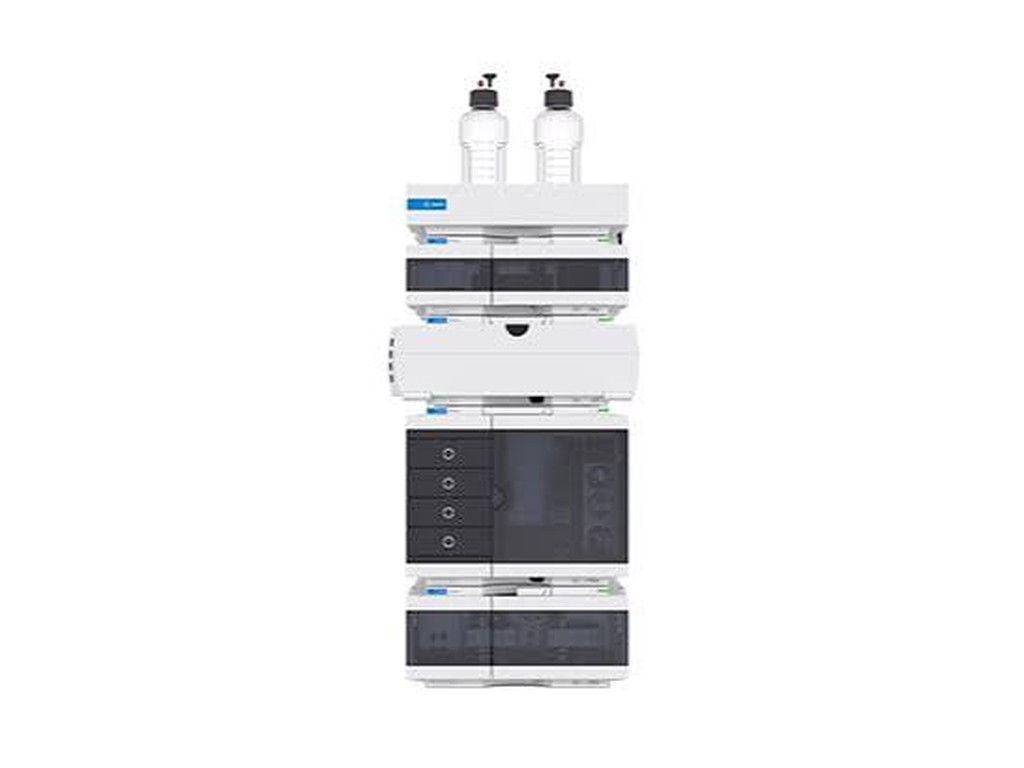
HPLC — Assay, related substances, content uniformity, dissolution samples

HPLC

Differential partitioning between a liquid mobile phase and a solid stationary phase.
Applications ·
Assay, related substances, content uniformity, dissolution samples
Industries ·
Pharma, food, nutraceuticals, water
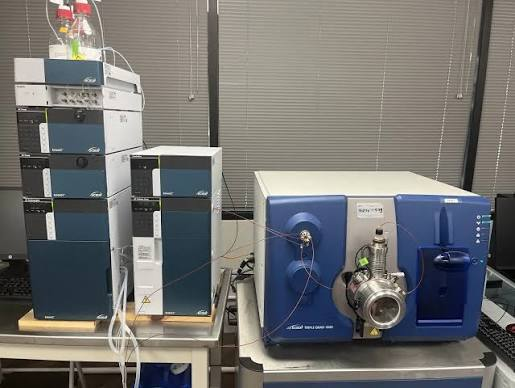
LC-MS/MS — Trace impurities, residues, bioanalysis, metabolite studies

LC-MS/MS

Chromatographic separation followed by tandem mass filtering of precursor and product ions.
Applications ·
Trace impurities, residues, bioanalysis, metabolite studies
Industries ·
Bioanalytical CROs, pharma R&D, food safety
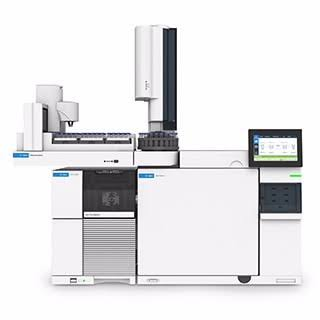
GC-MS/MS — Residual solvents, pesticides, flavour and aroma profiling

GC-MS/MS

Gas-phase separation on a capillary column with mass spectrometric detection.
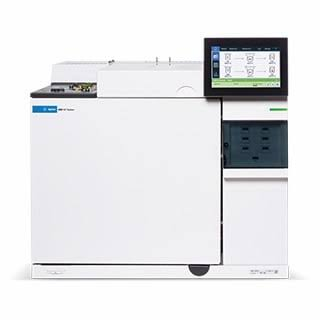
Applications ·
Residual solvents, pesticides, flavour and aroma profiling
Industries ·
Pharma, food and beverage, environmental
GC — Residual solvent limits, alcohol content, purity checks

GC

Volatile analytes carried by an inert gas and detected by FID or TCD.
Applications ·
Residual solvent limits, alcohol content, purity checks
Industries ·
Pharma, chemicals, beverages
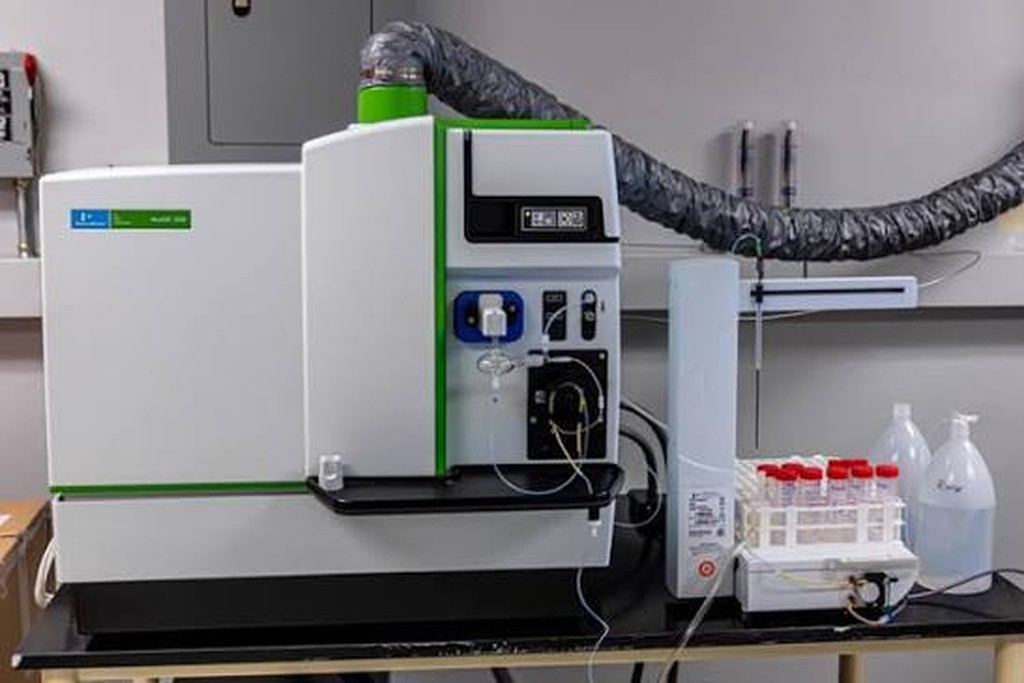
ICP-MS — Elemental impurities, heavy metals, trace minerals

ICP-MS

Argon plasma ionises the sample; ions are separated by mass-to-charge ratio.

Applications ·
Elemental impurities, heavy metals, trace minerals
Industries ·
Pharma, water, food, environmental

UV-Visible Spectroscopy

Beer–Lambert law: absorbance is proportional to concentration.

Applications ·
Assay, dissolution, content estimation
Industries ·
Pharma QC, food, water, academia

FTIR

Infrared absorption at characteristic molecular vibration frequencies.

Applications ·
Identity confirmation, polymorph and polymer checks
Industries ·
Pharma raw materials, polymers, forensics

AAS

Atomised sample absorbs element-specific light from a hollow cathode lamp.
Applications ·
Single-element metal determination
Industries ·
Water, food, metallurgy, pharma
Molecular Biology Platforms — RT-PCR assays, genotyping, sequencing workflows

Molecular Biology Platforms

Amplification and sequence-based detection of nucleic acids.

Applications ·
RT-PCR assays, genotyping, sequencing workflows
Industries ·
Clinical research, biotech, diagnostics

Weighing Systems

Electromagnetic force restoration with calibrated reference masses.

Applications ·
Sample and standard weighing, calibration checks
Industries ·
Every regulated laboratory
Day 3 — Masterclass

Understanding Global Pharmacopoeias

A pharmacopoeia is a legally recognised book of quality standards for medicines — it states which tests a product must pass, by which method, and within which limits. Industries follow them because regulators, buyers and courts treat them as the definition of acceptable quality.

IP India

Indian Pharmacopoeia

  • Official book of drug standards in India, published by IPC
  • Defines drug quality standards enforceable under law
  • Contains official drug monographs for APIs and formulations
  • Specifies testing requirements, limits and methods
BP United Kingdom

British Pharmacopoeia

  • Sets UK quality standards for medicines and substances
  • Widely accepted internationally in many regulated markets
  • Provides detailed quality specifications and test procedures
USP United States

United States Pharmacopeia

  • US pharmaceutical standards recognised in the FD&C Act
  • Globally important for exports to the US market
  • Supplies USP reference standards used to qualify methods
Ph. Eur. European Union

European Pharmacopoeia

  • Legally binding standards across EU member states
  • Drives harmonisation of test methods and general chapters
  • Applied throughout pharmaceutical manufacturing and release
JP Japan

Japanese Pharmacopoeia

  • Japanese quality standards for drugs and excipients
  • Internationally relevant through ICH harmonisation work
WHO Global

WHO Guidelines

  • Protects global public health through common expectations
  • Frames quality assurance systems for medicines
  • WHO GMP is a baseline for many national regulators

Core compendial concepts

Monographs
Product-specific chapters listing every test, method and limit for a substance.
Reference standards
Highly characterised materials used to calibrate and qualify a test.
General chapters
Common procedures — dissolution, sterility, residual solvents — cited by monographs.
Validation concepts
Proving a method is accurate, precise, specific, linear and robust.
Acceptance criteria
The numeric limits a result must meet for the batch to pass.
Compendial testing
Testing exactly as written in the pharmacopoeia, with no deviation.

Learning outcome: Students understand why medicines sold globally must comply with pharmacopoeial standards.

Day 4

Understanding the Regulatory Ecosystem

Who sets the rules, who enforces them, and under which law — mapped from India to the rest of the world.

India

CDSCO
Central Drugs Standard Control Organisation
  • National drug regulator of India
  • Approves new drugs and grants marketing permissions
  • Oversees clinical trials and safety reporting
  • Regulates import, manufacture and licensing of drugs
FSSAI
Food Safety and Standards Authority of India
  • Sets food safety standards for the country
  • Issues food business licensing and registration
  • Enforces compliance through inspection and sampling
  • Notifies testing requirements and recognised labs
BIS
Bureau of Indian Standards
  • Publishes Indian Standards (IS) for products and methods
  • IS 10500 governs drinking water quality
  • Runs product certification and the ISI mark scheme
NABL
National Accreditation Board for Testing and Calibration Laboratories
  • Accredits laboratories to ISO/IEC 17025
  • Assesses technical competence, not just paperwork
  • Accredited reports gain national and international acceptance
APEDA
Agricultural & Processed Food Products Export Development Authority
  • Governs export compliance for agri and processed foods
  • Approves labs for export testing and residue monitoring
Agmark
Agmark Certification
  • Certifies quality grades of agricultural produce
  • Grading standards notified under the AGMARK Act framework
CPCB
Central Pollution Control Board
  • Monitors air, water and effluent quality
  • Sets discharge norms and recognises environmental labs
MoEFCC
Ministry of Environment, Forest and Climate Change
  • Frames environmental regulations and notifications
  • Grants environmental clearances and oversees waste rules
AYUSH
Ministry of Ayush
  • Regulates Ayurveda, Yoga, Unani, Siddha and Homoeopathy products
  • Sets quality norms for traditional medicine manufacturing

Global regulatory agencies

US FDA
Food and Drug Administration

Regulates drugs, food and devices for the US market; inspects manufacturing sites worldwide.

EMA
European Medicines Agency

Coordinates scientific evaluation and supervision of medicines across the EU.

MHRA
Medicines and Healthcare products Regulatory Agency

UK regulator for medicines, devices and blood components.

WHO
World Health Organization

Issues global guidance, prequalification and WHO GMP expectations.

ISO
International Organization for Standardization

Publishes management and laboratory standards used across industries.

Codex
Codex Alimentarius

International food standards, codes of practice and residue limits.

Acts, Rules & Regulations covered

Standards covered

ISO/IEC 17025

Competence of testing and calibration laboratories — the basis of NABL accreditation.

ISO 9001

Quality management systems for any organisation.

ISO 22000

Food safety management systems across the food chain.

HACCP

Hazard analysis and critical control points in food processing.

GMP

Good Manufacturing Practices for drug and food production.

GLP

Good Laboratory Practices for study conduct and data reliability.

GDP

Good Distribution Practices for storage and transport of medicines.

GCP

Good Clinical Practice for ethical, reliable clinical trials.

Codex Standards

International food standards and maximum residue limits.

BIS Standards

Indian Standards for products, water and test methods.

FSSAI Standards

Indian food product standards, additives and contaminant limits.

WHO GMP

WHO manufacturing expectations, often required for exports and tenders.

Day 5

Quality systems & documentation

Students perform documentation exercises on real formats — the skill that separates a trained candidate from an untrained one.

SOP
Standard Operating Procedure — the approved way a task must be performed, every time.
COA
Certificate of Analysis — the formal result sheet released with a batch.
Batch Records
The complete manufacturing and testing history of one batch.
Audit
Internal, customer or regulatory verification that the system is followed.
CAPA
Corrective and Preventive Action — fix the problem and stop it recurring.
Root Cause Analysis
Structured investigation (5-why, fishbone) to find the true cause.
Validation
Documented proof that a method, process or system does what it claims.
Calibration
Comparing an instrument against a traceable standard at defined intervals.
Traceability
Following any result back to sample, analyst, instrument and standard.
Programme outcomes

What students walk away with

0
Laboratory sections toured
0+
Instruments demonstrated
0
Pharmacopoeias covered
0+
Regulatory bodies explained
0
Acts & rules decoded
0
Quality standards mapped
Industrial awareness Instrument exposure Regulatory knowledge Pharmacopoeia understanding Documentation skills Quality system knowledge Career readiness
Certification

Premium QR-verifiable certificates

Every certificate carries a unique ID and QR code. Recruiters and colleges can confirm authenticity instantly on our verification portal — nothing to forge.

BioBridge India
Certificate of Industry Immersion
Awarded in association with YONTUS Life Sciences
Certificate ID
BBI-YYYY-XXXXXX
Open verification portal
  • One Day Certificate

    Industry Immersion & Participation Certificate issued on the same day.

  • One Week Certificate

    Industry Excellence Certificate covering all six days of training.

  • Skill Assessment

    Recorded assessment of instrument, documentation and regulatory understanding.

  • Digital Verification

    Unique certificate ID with QR code, verifiable any time on our verification portal.

FAQ

Questions students ask us

Open registration for all students

Step Into a Real Industry Laboratory.

Anyone can register — no college sponsorship needed. Each student applies individually for the one-day or one-week programme at a fixed per-participant fee.